Article
Why I Built GroceryMind
How a personal project became my engineering playground for exploring AI, Azure and modern software engineering.
For years, I wanted to build my own application.
Not another tutorial.
Not another “Hello World”.
A real product.
Something I would actually use every week.
The problem wasn’t ideas.
It was time.
Between client projects, deadlines and family life, there was always something more important.
Earlier this year, I made one of the biggest decisions of my career: I left SWIFT and started working as an independent consultant.
Besides the excitement of this new chapter, it also gave me something I hadn’t had for years.
Time.
Time to finally build something of my own.
That’s how GroceryMind was born.
Not because the world needed another grocery application.
Because I wanted a real product where I could keep learning, experiment freely and continue growing as an engineer.
Why a Grocery Application?
Every week I order groceries online.
The supermarket application works perfectly fine.
But like every application built for millions of users, it tries to satisfy everyone.
I wanted something built around the way I shop.
Something that remembers what I usually buy.
Something that knows what’s already in my pantry.
Something that can suggest what I’ll probably need next week.
Maybe one day it will even help me plan meals automatically.
Whether GroceryMind ever reaches that vision isn’t really the point.
The important part is that it solves a real problem I actually care about.
Unlike a demo application, GroceryMind has to work.
Because I use it every week.
That changes the way you think about engineering.
What GroceryMind Looks Like Today
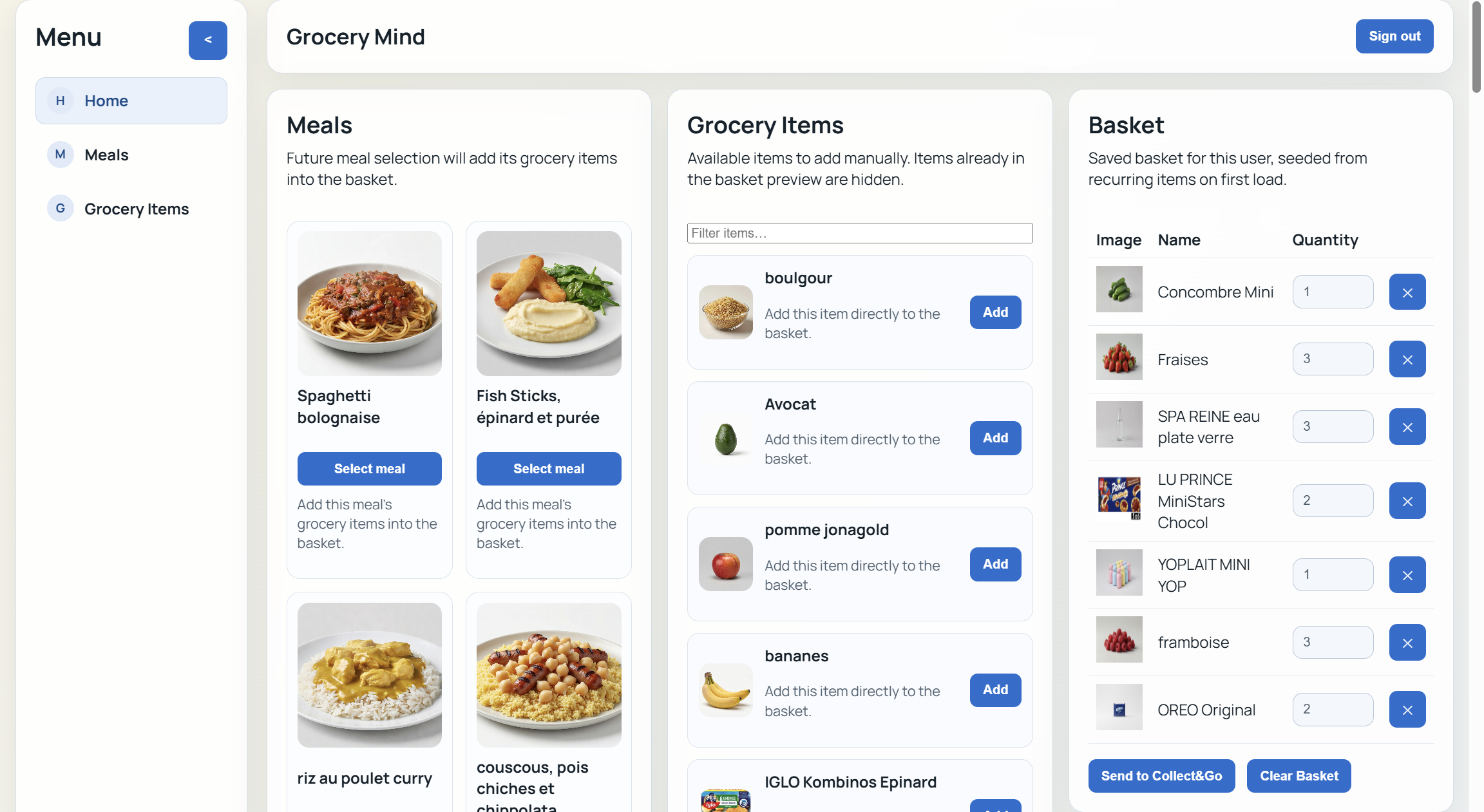
Today GroceryMind already allows me to manage my weekly grocery shopping from a single place.
The feature set is still intentionally small, but it’s continuously evolving.
More importantly, every feature is developed with the same engineering mindset I would apply on a client project.
- Clean Architecture
- Automation
- Testing
- Infrastructure as Code
- Continuous Delivery
This is no longer just a side project.
It’s becoming a real product.
The Current Architecture
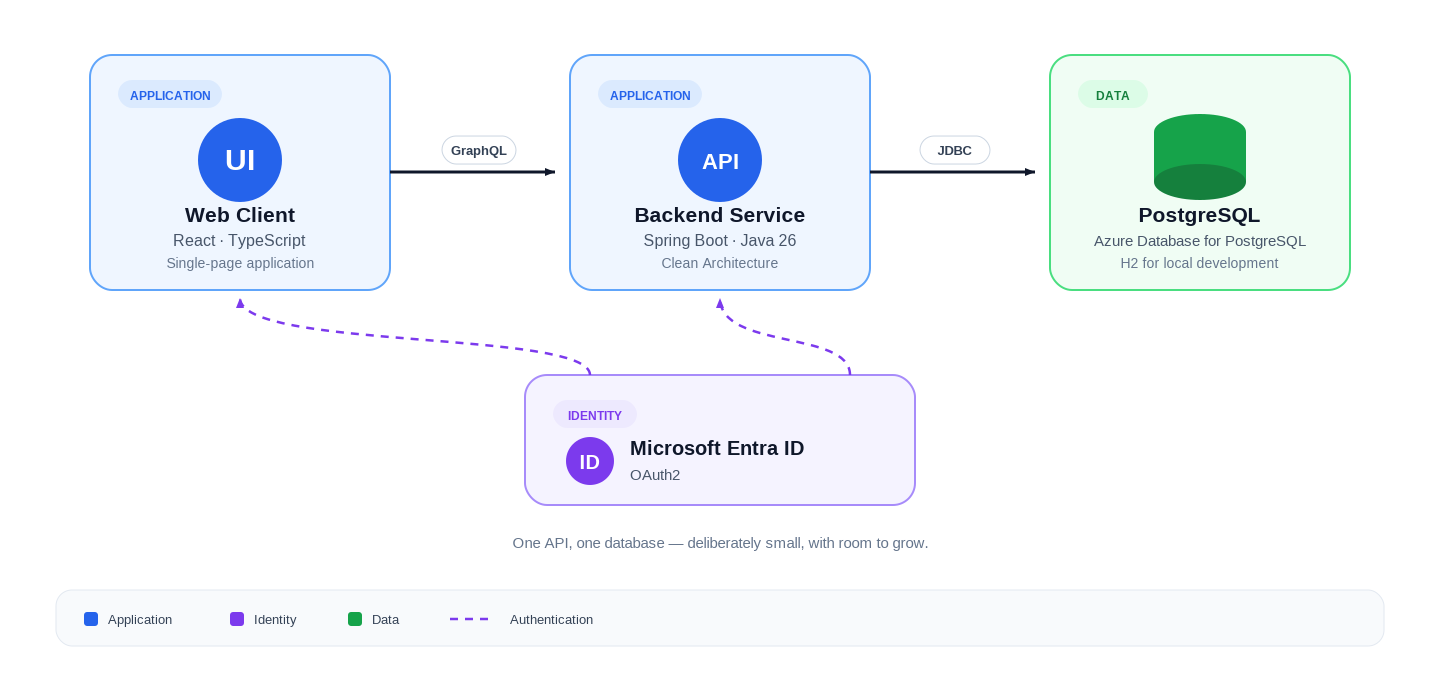
Choosing the technology stack turned out to be one of the most interesting parts of the project.
Should I build a traditional REST API or take the opportunity to learn GraphQL?
Which Azure services make sense for a small application?
How should the project be structured to remain simple today while leaving room for tomorrow?
Rather than making those decisions entirely on my own, I used OpenAI Codex as a discussion partner.
We explored different options, challenged assumptions, discussed trade-offs and gradually shaped an architecture that felt like the right balance between simplicity, learning opportunities and maintainability.
Today’s stack includes:
- React + TypeScript
- Spring Boot 4 running on Java 26
- GraphQL
- PostgreSQL (with H2 for local development)
- Microsoft Entra ID (OAuth2)
- Azure as the hosting platform
This architecture is not the destination.
It’s simply a snapshot.
Some decisions will certainly change.
Others will prove to be mistakes.
That’s perfectly fine.
Learning is the entire point of this project.
Running on Azure
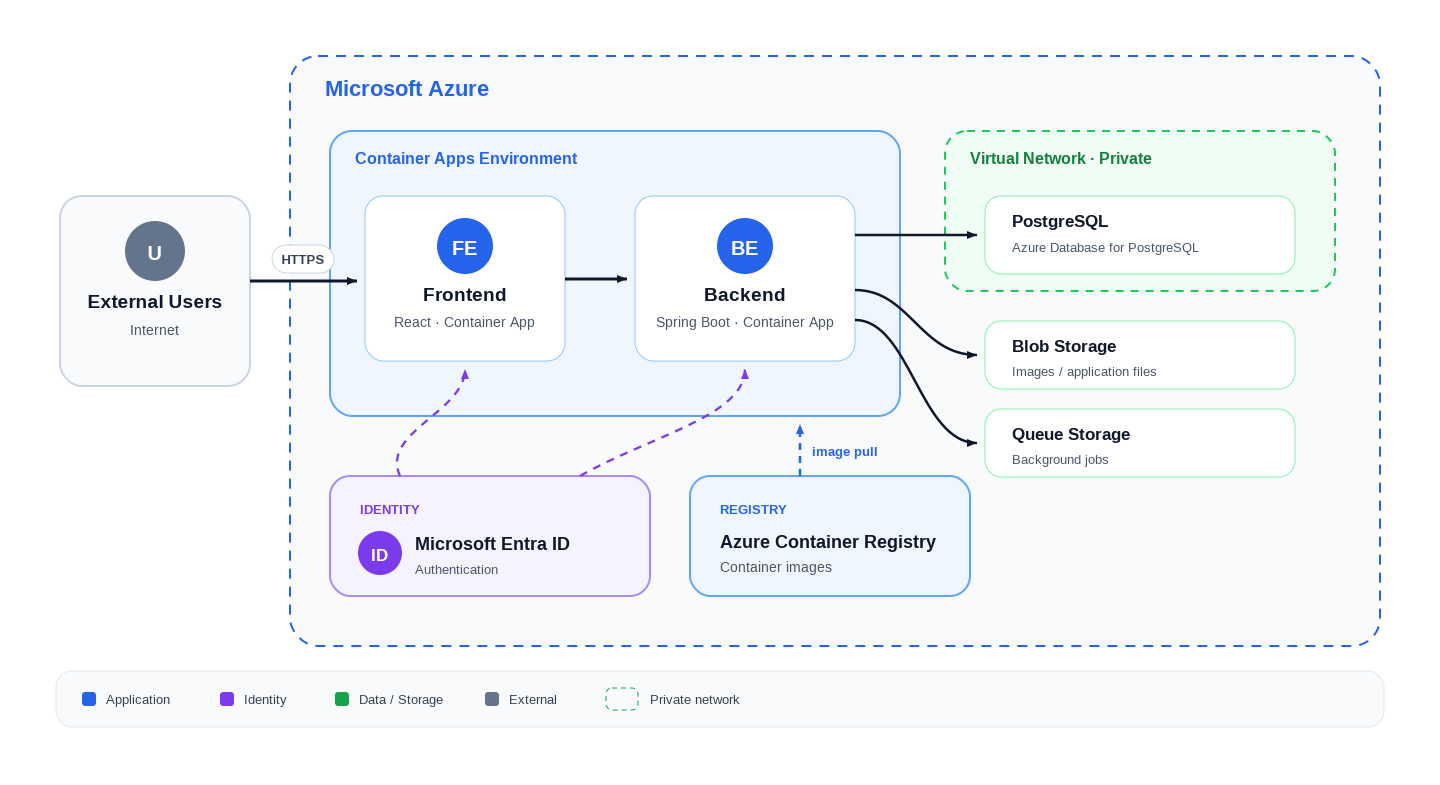
The application currently runs entirely on Azure.
Today’s platform already includes:
- Azure Container Apps
- Azure Database for PostgreSQL
- Azure Container Registry
- Azure Blob Storage
- Azure Queue Storage
- Microsoft Entra ID
- Private networking between the backend and the database
There are already many ideas I’d like to explore next.
- Azure Key Vault
- Application Insights
- Metrics and observability
- Eventually Kubernetes
Not because they’re required today.
Because I want to understand them before I need them on a customer project.
Everything as Code
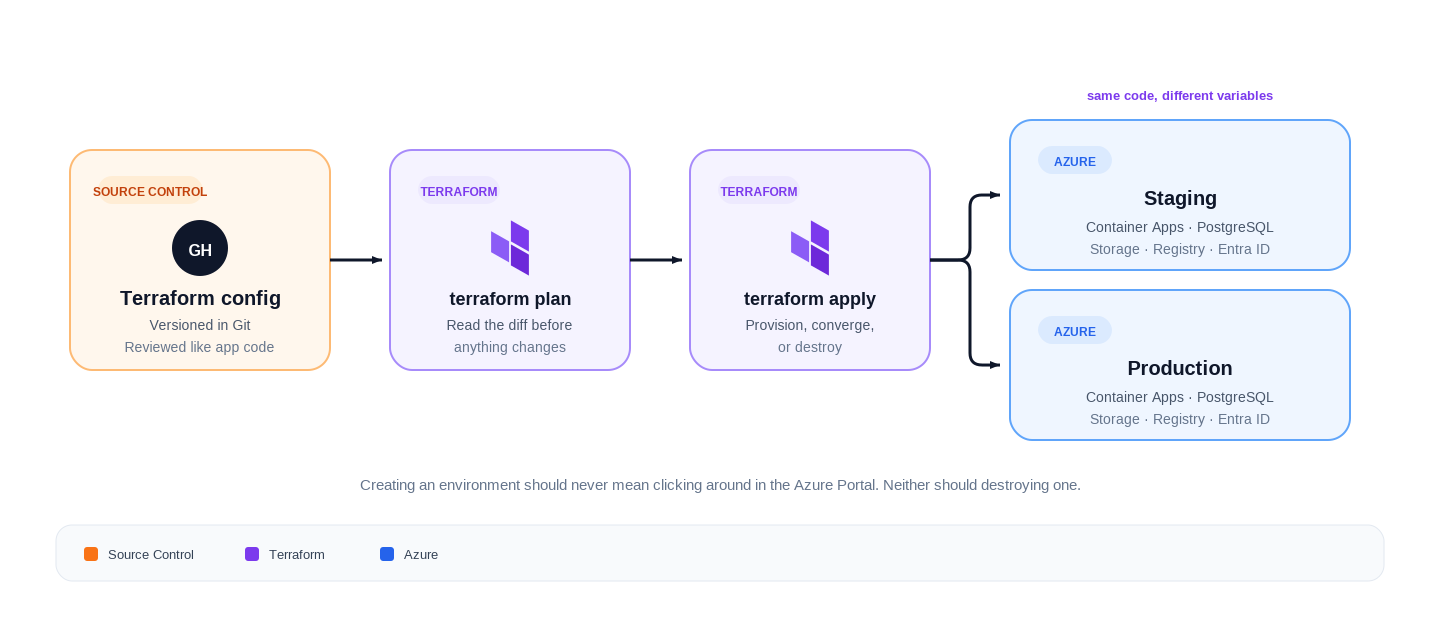
Every Azure resource is provisioned using Terraform.
Creating a new environment should never require clicking around in the Azure Portal.
Destroying an environment should be just as easy.
Besides giving me repeatable environments, it also pushes me to think about infrastructure the same way I think about application code: versioned, reviewable and reproducible.
CI/CD from Day One
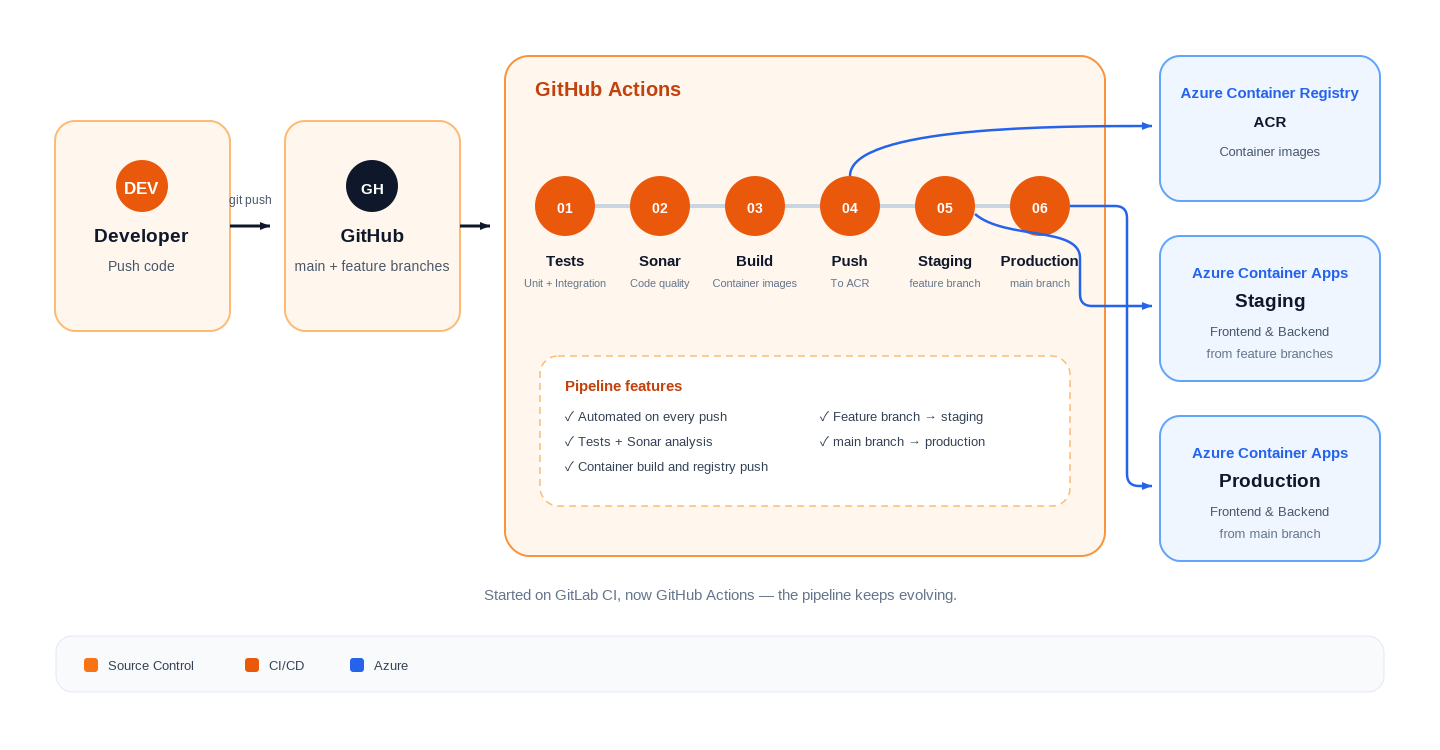
Automation has always been one of my engineering principles.
GroceryMind started with GitLab CI before I migrated everything to GitHub Actions.
Today every change automatically goes through:
- Build
- Unit tests
- Sonar analysis
- Docker image creation
- Deployment
The project originally had a single environment.
Today it has separate staging and production environments.
Just like the application itself, the delivery pipeline continues to evolve.
There is still plenty of room for improvement.
That’s part of the fun.
Building Together with AI
AI isn’t just a future feature of GroceryMind.
It’s already part of how GroceryMind is built.
I use it to brainstorm ideas, refine specifications, challenge architectural decisions, write code, review implementations and better understand technologies I’m discovering for the first time.
One of the biggest lessons so far has been learning that AI works best as a collaborator, not as a replacement for engineering judgement.
Looking Ahead
This article intentionally stayed at a high level.
Its purpose wasn’t to explain every technical decision.
It was simply to introduce the project that will probably appear from time to time throughout this blog.
The architecture will evolve.
The infrastructure will evolve.
The deployment pipeline will evolve.
My way of working with AI will evolve.
I’ll make mistakes.
I’ll change my mind.
And hopefully, I’ll become a better engineer along the way.
That’s exactly what GroceryMind is for.